
Look, we get it. You've probably read a dozen articles promising that AI will revolutionize your business. Most of them are heavy on buzzwords and light on actual strategy.
Here's what's different in 2026: AI isn't experimental anymore. It's either powering your competitors' growth or it's about to. The businesses winning right now aren't using AI to replace their teams, they're using it to make smarter decisions faster than anyone else in their market.
We've spent the past eight months analyzing what actually works (and what's just hype). These nine strategies aren't theory. They're what's separating businesses that are growing from those wondering why their traffic isn't converting.
1. AI-Powered Content Personalization That Actually Feels Personal
Remember when "personalization" meant adding someone's first name to an email? Those days are done.
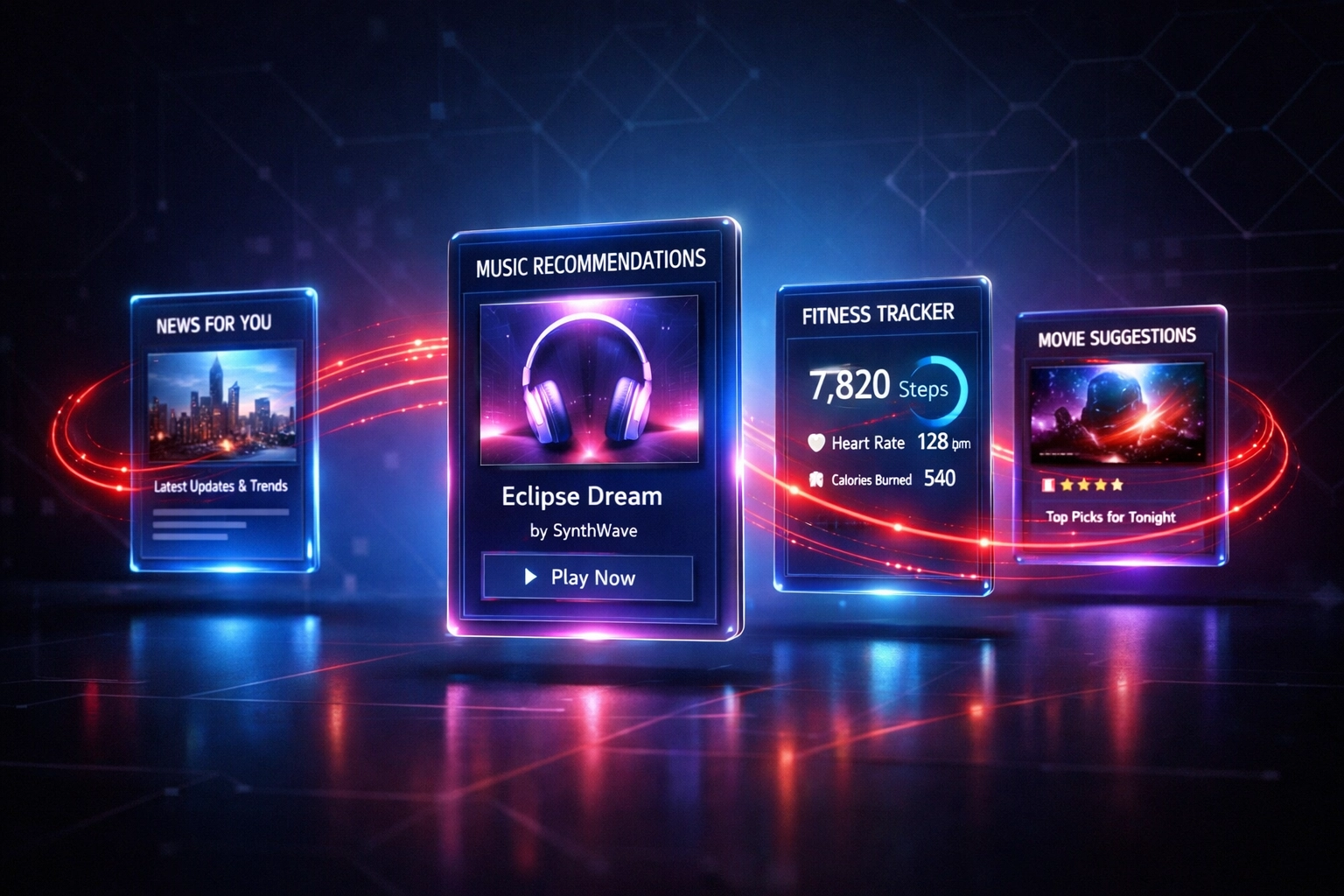
In 2026, your website visitors expect content that adapts to their behavior in real-time. We're talking about AI that notices a visitor from Miami looking at automation services and immediately surfaces case studies from South Florida businesses. Or content that changes based on whether someone's a first-time visitor or a returning customer who's checked your pricing page three times.
The numbers don't lie: dynamic, AI-personalized content performs 202% better than static content. That's not a marginal improvement, that's the difference between someone bouncing in 8 seconds versus actually reading what you have to say.
What to do this week: Start tracking which pages your repeat visitors engage with most. Even basic segmentation gives AI something to work with.
2. GEO Optimization: Because "Near Me" Searches Aren't Going Anywhere
Here's something most business owners miss: when someone searches "digital marketing agency near me" in Fort Lauderdale, Google's AI is making split-second decisions about which businesses to show. If your GEO optimization game is weak, you're invisible.
But here's what's changed, AI now factors in micro-location signals. Your Google Business Profile, local backlinks, location-specific content, even your customer reviews' geographic data all feed into increasingly sophisticated algorithms.
The businesses winning local search in 2026 are creating location-specific landing pages that don't feel generic. They're answering questions like "How much does web development cost in Delray Beach?" with actual, useful answers that include local context.
Real talk: If you're a service business and you're not dominating the first three "near me" results in your area, you're leaving money on the table. Probably $1,800-$4,200 monthly for most small businesses.
3. Humanizing AI Content (Or Why Robots Still Can't Tell Your Story)
Let's address the elephant in the room: yes, AI can write. No, it shouldn't write everything.
The sweet spot in 2026 is using AI to handle the heavy lifting, research, first drafts, optimization, while humans inject personality, specific examples, and that indefinable thing we call voice.
Here's what we've learned: readers can spot generic AI content from a mile away. But AI-assisted content that's been edited by someone who actually knows your business? That performs just as well as fully human-written content, but you can produce 3-4 times more of it.
The strategy isn't "human versus AI." It's "human plus AI versus everyone still doing everything manually."
4. Vertical Video for SEO: Yes, Google Cares About Your TikTok-Style Content Now
If you thought vertical video was just for social media, 2026 has news for you: Google is prioritizing vertical video content in search results, especially for mobile queries.
Why? Because that's how people consume content now. When someone searches "how to automate my business processes" on their phone, a 60-second vertical video explaining the basics ranks alongside traditional blog posts.
The businesses capitalizing on this are creating short, valuable vertical videos optimized with proper titles, descriptions, and transcripts. They're not polished productions: they're quick, genuine explanations that answer specific questions.
Implementation time: Under 2 hours to create your first three videos. Use your phone. Answer the three questions customers ask you most often.

5. Agentic Commerce: When AI Actually Takes Actions (Not Just Suggestions)
Here's where things get interesting. Traditional chatbots answer questions. Agentic AI takes action.
We're talking about AI that doesn't just tell a customer "here are your options": it processes the order, schedules the consultation, updates your CRM, and triggers your follow-up sequence. All without human intervention.
The shift from conversational AI to agentic AI represents the biggest change in customer experience since mobile apps. Early adopters are seeing conversion rate increases of 40-60% because the friction between "interested" and "customer" basically disappears.
The reality check: This requires solid backend systems. If your business processes are chaotic, agentic AI just automates chaos. Fix your workflows first (automation solutions can help with this).
6. Web Security Isn't Boring Anymore: React2Shell and Why You Should Care
Quick question: when was the last time you thought about your website's security vulnerabilities? If the answer is "never" or "when we launched," you've got a problem.
React2Shell vulnerabilities specifically target React-based applications (which, let's be honest, is probably your website if it was built in the past four years). Attackers exploit server-side rendering to inject malicious code.
The business impact? A compromised website means lost customer trust, potential data breaches, and Google delisting your site from search results. We've seen businesses lose $18K+ in revenue during the weeks it takes to fix and recover from security incidents.
This month's action item: Run a security audit. Update your dependencies. Implement proper input validation. This isn't sexy work, but it's what keeps you in business.
7. AI Trust Signals: Proving Your AI Content Isn't Garbage
Here's the paradox: everyone's using AI to create content, but customers are skeptical of AI-generated content. The solution? AI trust signals.
These are specific indicators that show your content comes from actual expertise: author credentials prominently displayed, original data or case studies, expert quotes, specific examples with numbers, and transparent sources.
Google's algorithms in 2026 are specifically looking for these signals. Content without them gets buried, even if it's technically well-written. Content with strong trust signals ranks higher and converts better.
The businesses winning aren't hiding their AI use: they're being transparent about it while proving human expertise backs every claim.
8. Google AI Overviews: Optimizing for Answers You Don't Control
If you haven't noticed, Google increasingly answers questions directly in search results through AI Overviews. For some queries, users never click through to websites.
This is both a problem and an opportunity. The problem: traditional SEO metrics (clicks, traffic) are changing. The opportunity: being cited in AI Overviews establishes authority even if users don't visit your site.
The strategy: Create comprehensive, authoritative content that directly answers specific questions. Use clear structure. Include data. Be the source that AI references.
Businesses optimizing for AI Overviews are seeing their brand mentioned in hundreds of searches monthly, even when users don't click through. That brand visibility compounds over time.

9. Zero-Click Search: Winning Without the Click
Related to AI Overviews but broader: zero-click searches are now the majority of Google searches. People get their answer and move on.
Does this mean SEO is dead? Absolutely not. It means the goal is changing from "get the click" to "get the visibility and authority."
Smart businesses are optimizing for featured snippets, ensuring their Google Business Profile is complete, and creating content specifically designed to answer questions so well that Google displays it directly.
The mindset shift: Zero-click visibility is still valuable visibility. Being the authoritative source Google references builds trust that converts in the long run, even if not on that specific search.
What This Actually Means for Your Business
Look, you don't need to implement all nine strategies tomorrow. That's not realistic, and anyone who tells you otherwise is selling something.
Here's what we recommend: pick two strategies from this list that directly address your biggest current challenge. If you're struggling with local visibility, focus on GEO optimization. If you're creating content but it's not converting, start with AI personalization.
The businesses that will dominate their markets in 2026 aren't doing everything: they're doing the right things consistently and using AI to do them faster and smarter than their competition.
The digital landscape isn't slowing down. But with the right strategies, you don't have to keep up: you can stay ahead.
Want to explore how these strategies apply specifically to your business? Let's talk. We've helped businesses across industries implement AI-powered marketing strategies that actually move the needle.
The playbook is here. The only question is: are you ready to use it?