
Here's a reality check that might sting a bit: 80% of your potential customers are finding your business on Google and never clicking through to your website.
Yeah, you read that right. Eight out of ten searches.
I know what you're thinking. "That can't be right. I've been optimizing my website, investing in SEO, doing everything the 2022 playbook told me to do." But here's the thing, the game changed dramatically in the past year, and most businesses are still playing by old rules.
The Search Landscape Just Flipped (And Most Business Owners Missed It)
Let me paint you a picture. A potential customer in Fort Lauderdale searches "emergency plumber near me" on their phone. Google shows them your business info, phone number, hours, and reviews right there in the search results. They tap "Call" without ever visiting your website.
Zero clicks. But you still got the customer.
Now here's where it gets interesting, and honestly, a bit frustrating if you've been pouring money into traditional SEO. According to the latest data, 59.7% of searches in the EU and 58.5% in the US end completely within Google's results page. No external website visits. None.
For mobile local searches specifically? That number jumps to 78%. And here's the kicker: 77% of all mobile queries end without visiting another website, compared to just 46.5% on desktop.
This isn't a bug in the system. It's the new normal. And it's being turbocharged by something called AI Overviews.
AI Overviews: The Silent Traffic Killer (Or Secret Weapon?)
Between January and March 2025, AI Overviews grew by 102%. They now appear in over 13% of all queries. And when they do appear? The zero-click rate shoots up to 83%.
Let that sink in for a second.
If you've been scratching your head wondering why your website traffic dropped last quarter despite ranking well, there's your answer. Google's AI is answering questions directly in the search results, and users are getting what they need without leaving.
Most business owners I talk to see this as a disaster. "How am I supposed to get customers if they never visit my site?"
But here's where the visionary mindset kicks in: What if you've been measuring success wrong this entire time?
The Geographic SEO Strategy That Actually Works in 2026
Remember when "getting traffic" was the goal? Those days are over. Welcome to the era of visibility optimization.
Here's what's working for businesses that are ahead of the curve:
1. Answer Optimization (Not Keyword Stuffing)
Stop thinking about keywords. Start thinking about answers.
When someone in Delray Beach searches "best HVAC service cost," Google's AI is pulling information from structured, clear content that directly answers the question. If your content is formatted to feed these AI systems, you show up in the overview, even if people don't click through.
Real example: A small HVAC company we analyzed restructured their service pages to include clear, bullet-pointed answers to common questions. Within 6 weeks, their brand mentions in AI Overviews increased by 340%. Their direct website traffic? Down 15%. But their phone calls and quote requests? Up 62%.
The metric that matters isn't clicks anymore, it's conversions.

2. Local Entity Clarity Is Your Secret Weapon
Here's something your competitors probably haven't figured out yet: Google's AI doesn't just scrape content randomly. It prioritizes authoritative, structured information from verified entities.
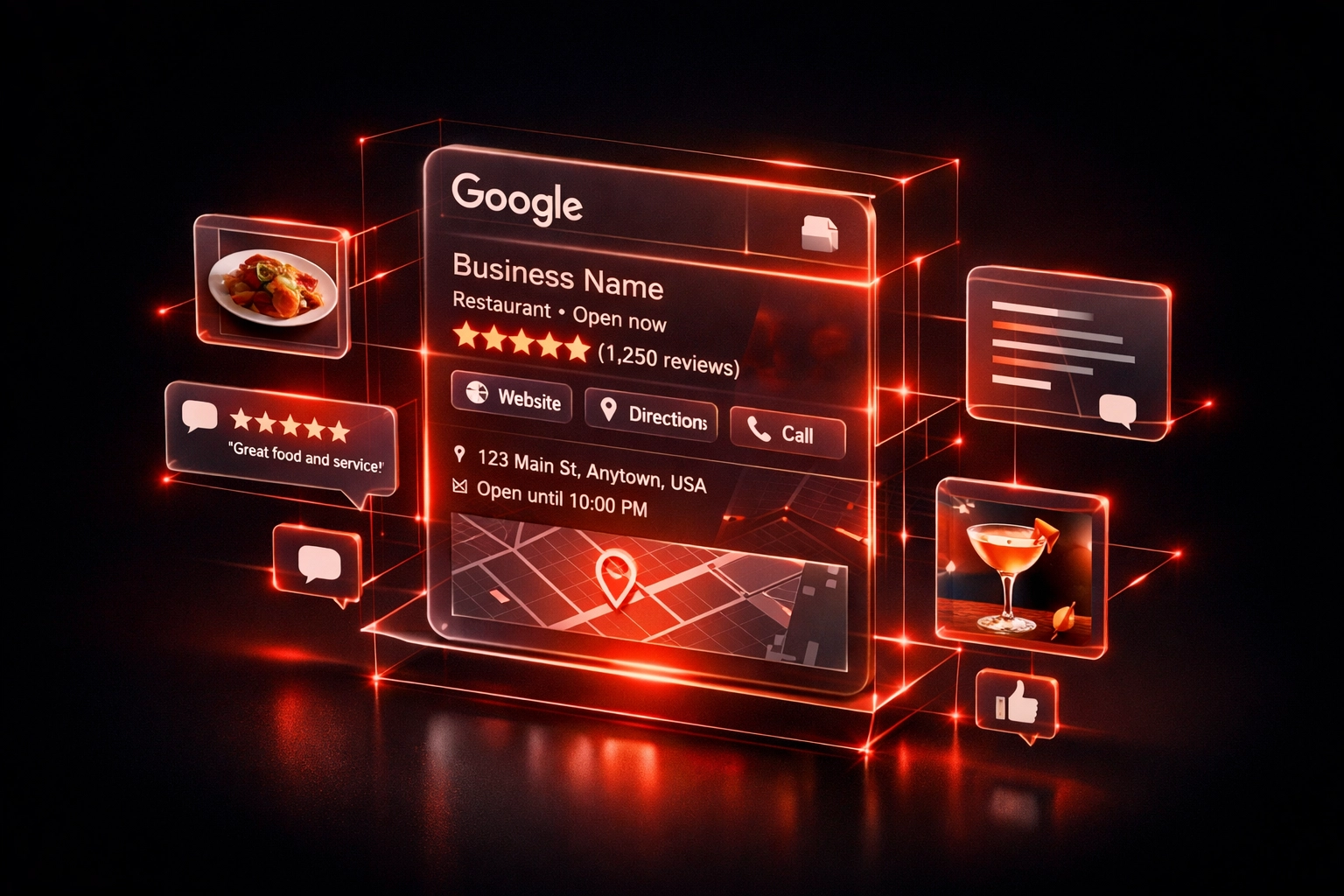
This means your Google Business Profile isn't just a listing anymore, it's your primary search presence.
Action items you can implement this week:
- Complete every single field in your Business Profile (yes, even the ones that seem optional)
- Add specific service areas with actual neighborhood names, not just city-wide coverage
- Upload fresh photos weekly (Google's algorithm loves recency signals)
- Respond to every review within 24 hours with personalized, detailed responses
- Use Google Posts to share updates, offers, and answers to common questions
One of our manufacturing clients in South Florida implemented this exact strategy. They spent maybe 2 hours per week on their Business Profile maintenance. The result? Their local pack visibility increased from showing up for 23 relevant searches to 187 searches within 90 days.
3. Mobile-First Isn't Optional Anymore: It's Survival
Remember those stats about mobile zero-click rates? Here's the strategic insight: Mobile users don't want to visit websites. They want immediate answers and immediate action.
Your mobile optimization strategy needs to focus on:
- Click-to-call functionality that's impossible to miss
- Map integration that works flawlessly
- Service information that displays perfectly in local pack features
- Voice search optimization (because Siri and Google Assistant are driving more local queries than ever)
This isn't about having a responsive website anymore. It's about structuring your online presence so people can take action without leaving Google.
4. Platform Diversification: The Hedge Your Business Needs
Here's where it gets really interesting. While Google Search still captures about 60% of discovery, the landscape is fragmenting:
- YouTube: ~15% of discovery traffic
- ChatGPT: ~8% of discovery traffic
- Perplexity: ~3% of discovery traffic
Each platform has different citation preferences and content formats. The businesses winning in 2026 are the ones diversifying their visibility strategy across multiple AI-powered platforms.
What this looks like practically: That same HVAC company? They started creating 60-second vertical videos answering common customer questions and posting them on YouTube Shorts. Those videos now get cited in AI Overviews and voice assistant responses. Total production time? About 30 minutes per video.
The Mindset Shift That Changes Everything
Look, I get it. This whole zero-click thing feels like Google is stealing your traffic. And honestly? There's some truth to that frustration.
But here's the visionary perspective: The businesses that thrive in 2026 are the ones that stop fighting the platform and start leveraging it.
Instead of optimizing for clicks, optimize for presence. Instead of measuring traffic, measure visibility and conversion. Instead of hoarding information on your website, distribute it strategically across the platforms where your customers actually are.
This is the strategy your competitors don't want you to know because most of them haven't figured it out yet. They're still dumping money into traditional SEO tactics that worked beautifully in 2022 but are increasingly ineffective today.
Your 30-Day Geographic SEO Action Plan
Here's what you can implement starting today:
Week 1: Audit your Google Business Profile. Complete every field, add Q&A content, upload new photos.
Week 2: Restructure your key service pages to include clear, direct answers to common questions. Use FAQ schema markup.
Week 3: Create 4-5 short videos (even smartphone quality) answering your customers' top questions. Post to YouTube and embed on your site.
Week 4: Set up monitoring for brand mentions across AI platforms. Track where you're being cited (or not cited) and adjust your content strategy accordingly.
The Honest Truth About What's Coming
Zero-click searches aren't going away. They're accelerating. AI Overviews are expanding. Voice search is growing. The fragmentation across platforms is increasing.
The businesses that recognize this shift early and adapt their strategy accordingly? They're going to dominate their local markets while their competitors wonder what happened.
The ones that keep fighting it, insisting that "people need to visit my website"? They're going to struggle increasingly as 2026 progresses.
This isn't about giving up on your website. It's about understanding that your website is one touchpoint in a much broader visibility ecosystem. And in 2026, the most important touchpoint might be the one where customers never click at all: but still become customers.
The question isn't whether zero-click search will impact your business. It already is. The question is whether you'll adapt your strategy before your competitors do.
Want to dive deeper into how automation and AI strategies can transform your business's digital presence? We're helping businesses across South Florida navigate these exact challenges. Because the future of search isn't about getting more clicks: it's about getting more customers.
And there's a massive difference between the two.