
Your business ranks on page one of Google. Traffic looks decent. But here's the problem: 43% of professionals are now skipping Google entirely and going straight to ChatGPT for answers. Your perfectly optimized content? It's invisible to them.
Welcome to the era of GEO, Generative Engine Optimization, where the rules of visibility just got rewritten.
What the Hell is GEO, Anyway?
Let's cut through the noise. GEO is optimization for AI search engines like ChatGPT, Perplexity, and Google's AI Overviews. Instead of ranking for clicks, you're optimizing to be cited as a source when AI generates answers.
Think about it: When someone asks ChatGPT, "What's the best CRM for a 15-person marketing agency in Miami?" the AI doesn't show them 10 blue links. It gives them a direct answer, synthesized from multiple sources, and cites the ones it trusts most.
If your content isn't structured for AI engines to understand and reference, you're not in that answer. Period.

The Numbers Don't Lie: AI Search is Exploding
Between January and May 2025, AI-referred sessions jumped 527%. That's not a typo. Perplexity alone processes over 500 million queries every month. These aren't hypothetical trends, this is how people search right now.
And here's the kicker: A page can rank #1 on Google but never get mentioned by ChatGPT if it lacks the structural elements AI prioritizes. Your SEO wins don't automatically transfer to GEO wins.
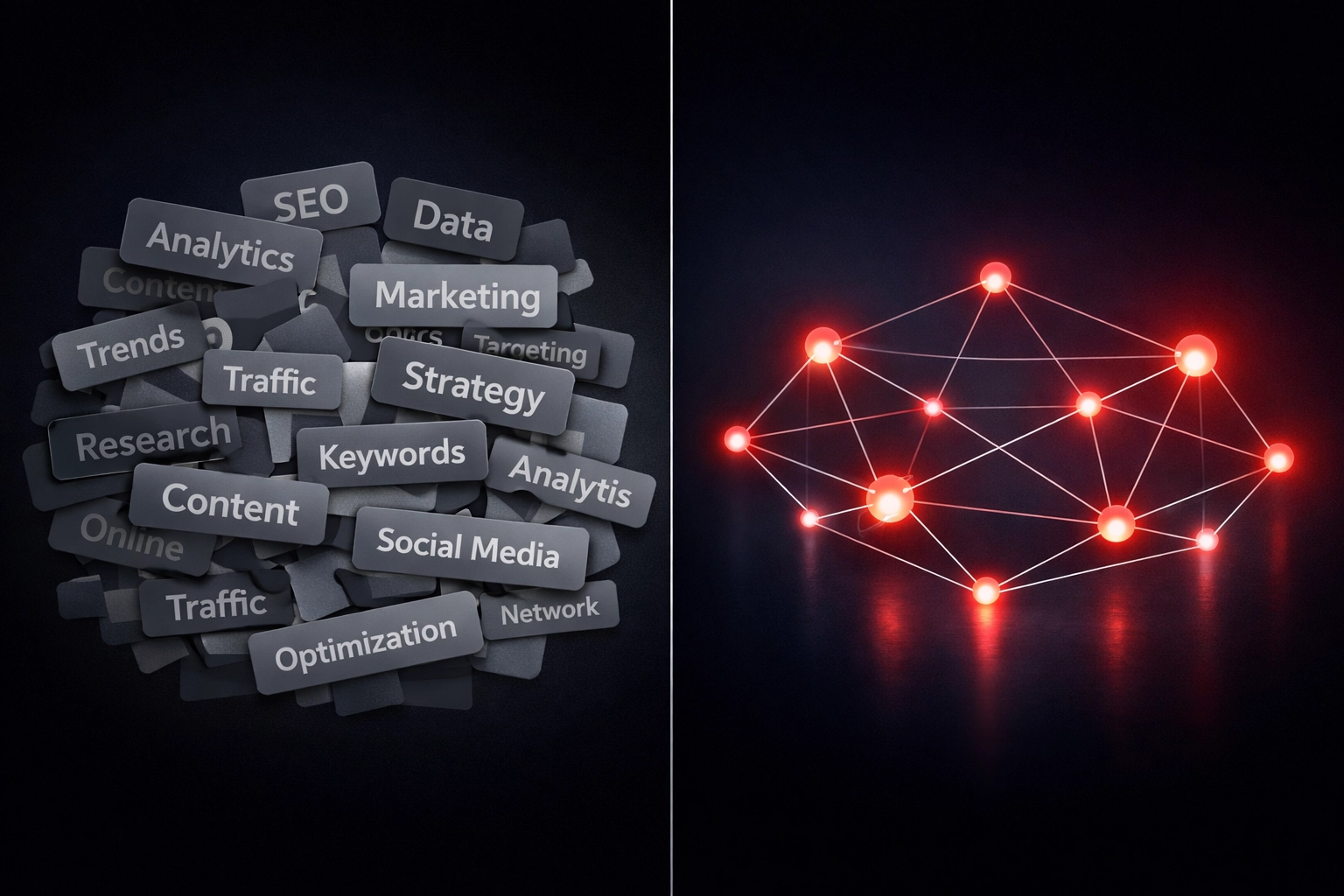
SEO vs. GEO: What Actually Changed
Let's break down the shift:
| Traditional SEO | GEO (Generative Engine Optimization) |
|---|---|
| Target: Google's PageRank algorithm | Target: LLMs and generative AI models |
| Goal: Drive clicks through rankings | Goal: Get cited in AI-generated answers |
| Focus: Keywords, backlinks, meta tags | Focus: Clarity, accuracy, structured data |
| Output: List of blue links | Output: Synthesized answers with citations |
The game isn't about gaming algorithms anymore, it's about becoming the authoritative source AI trusts.
Why Business Owners Should Care (Like, Right Now)
You've spent years (and probably thousands of dollars) building your SEO strategy. The thought of starting over feels exhausting. But here's the reality: your customers are already using AI search. If you're not optimized for it, you're losing visibility: and revenue: to competitors who are.
This isn't about abandoning SEO. Google isn't going anywhere. But AI search represents a new behavior pattern that requires a distinct approach. Think of GEO as the next evolution, not a replacement.

How GEO Actually Works: 4 Pillars You Need to Understand
1. Content Clarity Over Keyword Density
AI doesn't care if you stuffed "best digital marketing agency in Fort Lauderdale" 47 times into your blog post. It cares if your content clearly answers questions with factual accuracy.
What this means for you:
- Write in straightforward, structured formats (think: lists, tables, step-by-step guides)
- Answer questions directly in the first 2-3 sentences
- Use headers that reflect actual user questions
2. Structured Data is Your New Best Friend
AI engines prioritize content they can easily parse and understand. That means schema markup, clean HTML structure, and organized information architecture aren't optional anymore: they're essential.
Actionable step this week: Add FAQ schema to your service pages. It takes under 2 hours and immediately makes your content more digestible for AI.
3. Authoritativeness Matters More Than Ever
AI models cite sources they trust. That means E-E-A-T (Experience, Expertise, Authoritativeness, Trustworthiness) just became 10x more important.
Quick wins:
- Add author bios with credentials
- Link to authoritative external sources
- Update old content with current data and citations
- Showcase real case studies and client results
4. Context Over Keywords
Traditional SEO optimized for "what people type." GEO optimizes for "what people actually mean." AI can interpret nuanced intent: like understanding that "affordable CRM for small teams" and "budget-friendly project management tool for startups" are related queries.
What changes: Focus less on exact-match keywords and more on comprehensive topic coverage that addresses all related questions someone might have.

Real Talk: What This Looks Like in Practice
Let's say you run a web development agency in South Florida. Someone asks ChatGPT: "Should I use WordPress or custom code for my e-commerce site?"
Old SEO approach: You'd optimize a blog post for "WordPress vs custom code e-commerce" and hope to rank.
GEO approach: You'd create a comprehensive comparison that:
- Directly answers the question in the first paragraph
- Breaks down costs with specific numbers ($4,200 for WordPress vs $18K for custom)
- Includes structured pros/cons lists
- Cites real data and case studies
- Uses clear headers that match natural language queries
The AI engine reads your content, understands its authority and clarity, and cites you in its answer. That's how you win.
Getting Started: Your GEO Strategy This Month
You don't need to overhaul everything overnight. Start here:
Week 1: Audit Your Best Content
- Identify your top 10 performing pages
- Check if they answer questions clearly in the first 100 words
- Look for opportunities to add structured data
Week 2: Optimize for AI Citations
- Rewrite intros to be more direct
- Add FAQ sections to service pages
- Include specific data points and numbers
Week 3: Build Authority Signals
- Update author bios
- Add case studies with measurable results
- Link to credible external sources
Week 4: Monitor and Adapt
- Test your content in ChatGPT and Perplexity
- See what gets cited (and what doesn't)
- Adjust based on what AI platforms prioritize
The Bigger Picture: AI Search is Just Getting Started
Here's what keeps me excited: We're at the beginning of this shift. The businesses that adapt early: before GEO becomes saturated: will build advantages that compound over time.
Think about the businesses that dominated early SEO in 2005. They built authority that still pays dividends today. GEO is that same opportunity, happening right now.
What This Means for Your Business
Whether you're running a manufacturing company, a restaurant, or a service business in Miami, the principle is the same: Visibility is shifting from search results to AI-generated answers. Your content needs to evolve with it.
The good news? Most of your competitors aren't thinking about this yet. You have a window to get ahead: but it won't stay open forever.
Final Thought: Evolution, Not Revolution
GEO isn't about throwing away everything you know about SEO. It's about adapting your strategy for how people actually search today. Keep your SEO foundation strong, but layer GEO principles on top of it.
Your website still needs to rank on Google. But it also needs to be the source ChatGPT cites when someone asks a question in your industry.
The game changed. The question is: Are you ready to play it?
Need help optimizing your content for AI search engines? At Ingenious Digital, we're helping businesses navigate the shift from SEO to GEO with strategies that actually work. Let's talk about how to make your content unmissable( no matter where your customers are searching.)