
The development world just witnessed a seismic shift that could reshape how businesses approach software development forever. On December 19, 2025, Cursor: the AI code assistant company valued at a staggering $29.3 billion: acquired Graphite, creating what might be the first genuine threat to GitHub's decade-long dominance.
This isn't just another tech acquisition. This is the birth of an AI-native development ecosystem that could fundamentally change how your business builds, reviews, and deploys software. And if you're running a digital business, paying attention to this shift isn't optional: it's essential.
The $29.3 Billion Question: What Just Happened?
Let's break down what makes this acquisition so significant. Cursor didn't just buy a competitor: they solved their biggest bottleneck.
Here's the reality most businesses don't see: while AI has become incredibly good at writing code (Cursor's specialty), the real time-sink has shifted to code review and collaboration. Your development team might generate code 10x faster with AI, but they're still spending weeks in review cycles, managing pull requests, and coordinating changes across team members.
Graphite built its reputation solving exactly this problem. Their "stacked pull requests" system and AI-powered code review workflows have already won over engineering teams at companies like Shopify, Figma, and Snowflake. Now, by combining Cursor's code generation with Graphite's collaboration tools, they're creating something unprecedented: a complete AI-driven development platform that handles everything from initial code creation to final deployment.

The Numbers Tell a Story GitHub Can't Ignore
Cursor's growth trajectory is frankly terrifying if you're GitHub. The company reached $1 billion in annualized revenue in 2024: growing 20x in a single year. They're serving tens of thousands of engineers across major enterprises including Salesforce, Shopify, and Perplexity.
But here's what's really interesting: this growth happened while GitHub was actively adding AI features to retain users. That tells us GitHub isn't just facing competition: they're losing ground to a company that was founded in 2022.
For context, GitHub has been the undisputed king of code collaboration for over a decade. They host over 100 million repositories and virtually every software company on earth uses their platform. The fact that a three-year-old startup could grow to billion-dollar revenue while directly competing with them signals a fundamental market shift.
Why This Matters More Than Previous "GitHub Killers"
We've seen plenty of companies try to challenge GitHub before. GitLab, Bitbucket, and countless others have taken their shots. What makes Cursor different?
They're not trying to replicate GitHub: they're making it obsolete.
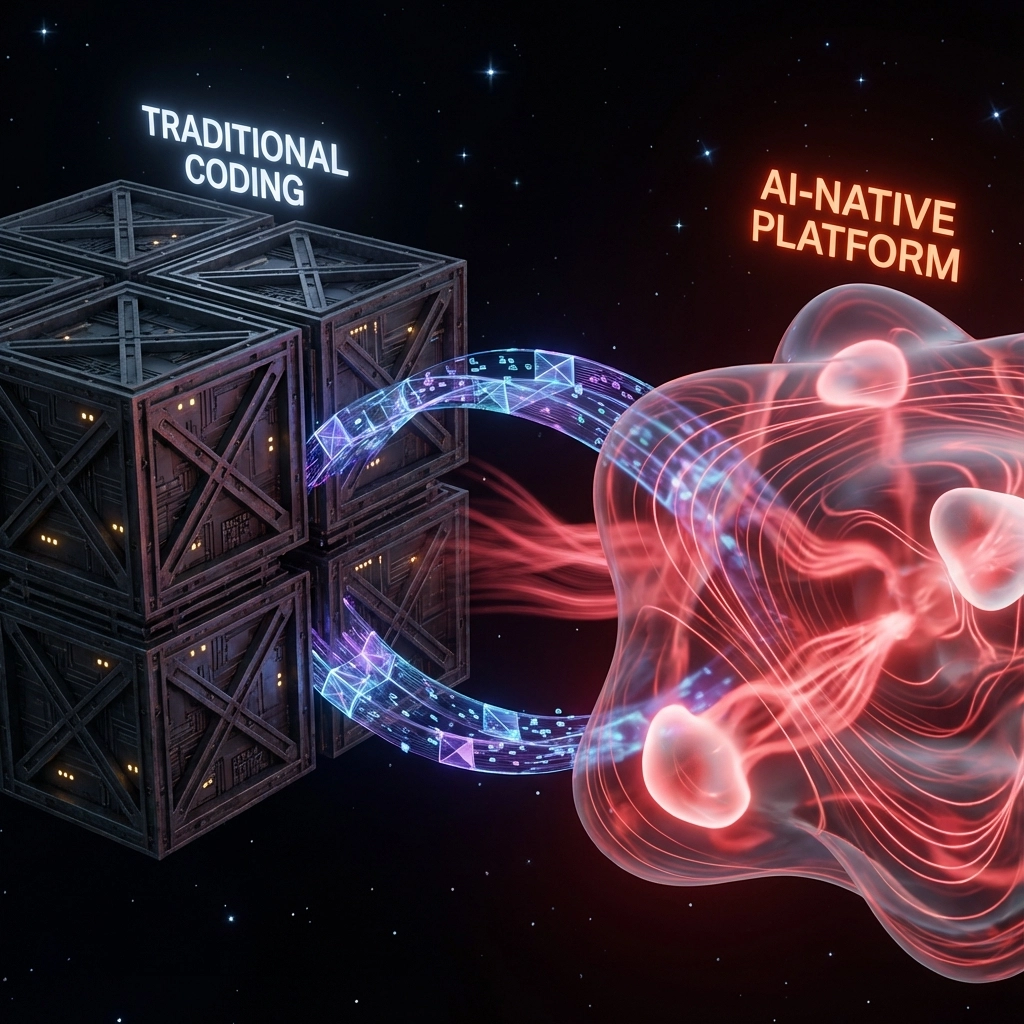
Traditional version control platforms, including GitHub, were built for human-driven development workflows. You write code, submit it for review, iterate based on feedback, and eventually merge. This process made sense when humans were doing all the coding.
But AI changes everything. When AI can generate entire features in minutes, the bottleneck isn't code creation: it's integration, review, and coordination. Cursor's acquisition of Graphite creates the first platform designed specifically for AI-augmented development workflows.

The Real Competitive Threat: Architecture vs. Features
GitHub's response to AI competition has been to add features: GitHub Copilot, AI-powered code suggestions, and enhanced collaboration tools. But they're essentially retrofitting AI onto a platform designed for a pre-AI world.
Cursor took the opposite approach: they built AI-native from day one. Every part of their platform assumes AI is generating, reviewing, and optimizing code. This architectural advantage is incredibly difficult for established players to match without rebuilding their entire infrastructure.
Think of it this way: GitHub is like adding autopilot features to a traditional car, while Cursor is building a self-driving vehicle from scratch. Both can get you where you're going, but one was designed for the future while the other is constrained by legacy decisions.
What This Means for Your Business
If you're running a business that depends on software development: whether that's a SaaS company, e-commerce platform, or digital marketing agency: this shift has immediate implications:
Faster Development Cycles: The Cursor-Graphite platform promises to compress development timelines significantly. What used to take your team months might happen in weeks.
Lower Development Costs: When AI handles both code generation and review, you need fewer senior developers to maintain code quality. This could dramatically reduce your development costs.
Competitive Pressure: If your competitors adopt AI-native development tools while you stick with traditional workflows, they'll be able to iterate and ship features much faster than you can.
The question isn't whether AI will transform software development: it's whether your business will adapt to these new tools or get left behind by competitors who do.
The Fragmented Battlefield
Of course, Cursor isn't the only player trying to reshape development. Amazon's CodeWhisperer, Google's AI coding tools, and startups like Tabnine are all competing for market share. The development tools landscape is more fragmented than it's been in years.
But that fragmentation might actually work in Cursor's favor. While GitHub has to defend against attacks from multiple directions, Cursor can focus on building the most comprehensive AI-native platform. Their acquisition strategy suggests they're thinking about consolidation: bringing together the best AI development tools under one roof.
GitHub's Structural Advantages
Let's be fair to GitHub: they're not going down without a fight, and they have significant structural advantages that won't disappear overnight.
Their user base is massive and deeply entrenched. Migrating years of repository history, issue tracking, and team workflows isn't trivial. GitHub also benefits from deep integration with the broader Microsoft ecosystem, including Azure, Visual Studio, and Office 365.
Most importantly, GitHub has enterprise relationships built over more than a decade. Large companies don't switch development platforms on a whim: they need extensive evaluation, security audits, and change management processes.
The Real Stakes: Platform Consolidation
What we're really witnessing is the beginning of platform consolidation in the AI era. Just as cloud computing led to the dominance of AWS, Azure, and Google Cloud, AI development is likely to consolidate around a few comprehensive platforms.
The question is whether that consolidation benefits established players like GitHub/Microsoft or AI-native challengers like Cursor. The Graphite acquisition suggests Cursor is betting on the latter: and they're putting their $29.3 billion valuation behind that bet.
Preparing for the AI Development Revolution
Whether GitHub successfully defends its position or Cursor succeeds in disrupting it, one thing is clear: AI-native development is the future. Businesses that understand and adapt to this shift will have significant competitive advantages.
Here's what forward-thinking companies are already doing:
Evaluating AI Development Tools: Don't wait for the market to settle. Start experimenting with AI coding assistants and collaboration platforms now.
Training Development Teams: Your developers need to learn how to work effectively with AI tools. This isn't just about using new software: it's about fundamentally different workflows.
Rethinking Development Processes: Traditional code review, testing, and deployment processes may need significant changes in an AI-driven world.
Planning for Faster Iteration: When development cycles compress from months to weeks, your entire business needs to adapt to faster product iteration.
The Broader Digital Transformation
This acquisition represents more than just competition between development platforms. It's a signal of broader digital transformation accelerating across every industry.
At Ingenious Digital, we've seen how AI adoption creates competitive advantages for businesses willing to embrace change. Companies that integrate AI into their core operations: whether that's development, marketing, or customer service: consistently outperform those that treat AI as an add-on feature.
The Cursor-Graphite deal is happening because AI is moving from experimental to essential. The businesses that recognize this shift early and adapt their operations accordingly will thrive in the next decade.
Looking Forward: The New Development Paradigm
Is GitHub facing its first real challenge? The answer is both yes and no.
Yes, because Cursor represents the first AI-native competitor with the resources, vision, and technological capability to build a genuinely superior platform for AI-augmented development.
No, because GitHub has faced competitive pressure before and has significant structural advantages that won't disappear overnight.
But the more important question is what this competition means for the future of software development. We're witnessing the emergence of a new development paradigm where AI isn't just a tool: it's the foundation of how software gets built.
The winners in this new paradigm won't necessarily be the companies with the best legacy platforms. They'll be the companies that best understand how to harness AI to accelerate innovation, reduce costs, and deliver value to customers faster than ever before.
Whether that's Cursor, GitHub, or someone we haven't heard of yet, one thing is certain: the future of software development is being written right now, and businesses that pay attention to these shifts will be the ones that shape that future.
The question for your business isn't whether to embrace AI-driven development: it's how quickly you can adapt to the tools and workflows that are already reshaping entire industries. The Cursor-Graphite acquisition is just the beginning.