
Here's the uncomfortable truth: your customers don't actually care how cool your AI is. They care whether they can trust it.
And in 2026, that trust isn't optional anymore: it's the price of admission.
The question has shifted from "Should we use AI?" to "How do we prove our AI won't screw things up?" Boards are asking it. Customers are demanding it. Regulators are enforcing it. And if you can't answer it convincingly, you're going to get left behind while your competitors figure it out.
Let me show you why AI trust signals have become the deciding factor between businesses that scale and those that stall: and more importantly, how you can build them faster than you think.
The Trust Crisis Nobody Saw Coming
Remember when everyone was racing to add "AI-powered" to their websites? That was 2024. We're past that now.
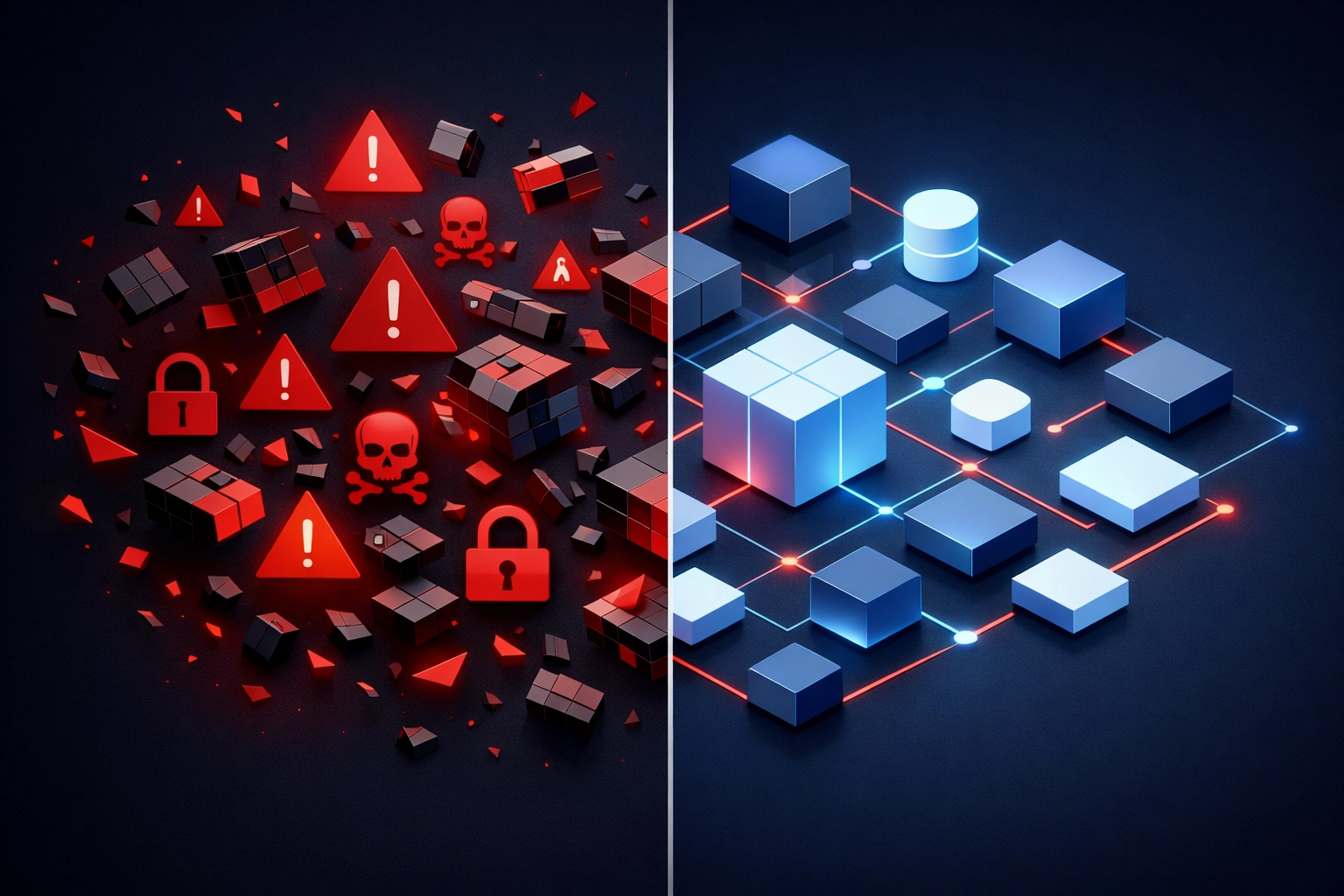
What happened was predictable in hindsight: companies deployed AI so fast that they created massive trust debt. Technical shortcuts. Security gaps. Black-box decisions nobody could explain. And now stakeholders: investors, customers, employees, regulators: are calling that debt due.

Here's what that looks like in real numbers: 65% of consumers still trust businesses that use AI technology, but that trust is conditional and fragile. One unexplained AI decision, one data breach, one biased outcome, and it evaporates. On the flip side, only 11% of organizations have actually documented measurable financial value from their AI investments in 2025.
Think about that gap. Most businesses can't prove their AI actually works, while most customers are ready to stop trusting it at the first sign of trouble.
That's not a technology problem. That's a trust signal problem.
Why This Became a Board-Level Emergency
The shift hit the C-suite hard. Corporate directors aren't asking "What's your AI strategy?" anymore. They're asking "What controls do you have over your AI?"
The SEC's Investor Advisory Committee has started pushing for enhanced disclosures on how boards oversee AI governance, treating it with the same weight as cybersecurity risks. Translation: if something goes wrong with your AI and you can't show you had proper oversight, you're personally liable.
CFOs are even harder to please. While 74% of AI leaders report productivity gains, boards aren't accepting "time saved" as proof of value anymore. They want P&L impact. They want documented ROI. They want to see that governance isn't slowing down AI: it's making it actually profitable.
This isn't corporate bureaucracy. This is recognition that ungoverned AI is a liability that can tank your valuation overnight.
What AI Trust Signals Actually Look Like
So what does "trust" mean in practical terms? It's not vague corporate speak. It's specific, measurable things you can build:
Clear accountability for every AI decision. If your AI recommends a price, approves a loan, or routes a customer service call, someone needs to be able to explain why: in plain English, to a non-technical audience, under pressure.
Documented governance that isn't just theater. AI model registers. Decision logs. Bias testing. Impact assessments. Not PDFs gathering dust: actual systems that people use before deploying anything new.
Transparent data practices customers can understand. What data are you collecting? Why? How does the AI use it? Who has access? If you can't explain this in two sentences, you don't have trust signals: you have trust problems.
Measurable outcomes that prove value. Resolution rates. Escalation frequency. Compliance breaches (ideally zero). Employee adoption rates. The metrics that show AI is working as intended and people actually trust it enough to use it.
Continuous monitoring with rapid correction. AI isn't "set it and forget it." The companies building trust have centralized platforms where they can track every deployment, catch errors fast, and fix them before they compound.
How to Build Trust Signals This Quarter (Not Next Year)
The good news? You don't need a massive governance overhaul to start. You need focused action on the things that matter most.
Start with one high-stakes use case. Don't try to govern all your AI at once. Pick the deployment where trust matters most: customer service, pricing, compliance: and build bulletproof governance there first. Document everything. Measure obsessively. Create the template you'll scale later.
Morgan Stanley did this brilliantly with their AI research assistant. They started with a targeted use case (helping financial advisors find information faster), ensured data permissions were airtight, and measured impact rigorously. Result: over $1 billion in anticipated ROI in year one, with a governance model they could expand across the organization.
Create a centralized AI deployment platform. Stop letting every team spin up their own AI tools in silos. Build shared libraries of agents, templates, and tools. Require testing and documentation before anything goes live. Make it easy to do things the right way and hard to cut corners.

This isn't about slowing down innovation. It's about speeding up trust. When stakeholders can see what's deployed, how it's performing, and who's accountable, they stop blocking AI projects and start championing them.
Implement role-based access and audit trails. Every AI interaction should be logged. Every model change should require approval from someone who understands the implications. Every output should be traceable back to the inputs and logic that created it.
Sounds intense, but modern AI platforms make this mostly automated. The companies that treat this as essential infrastructure: not optional compliance work: are the ones scaling fastest.
Measure trust as seriously as performance. Track how often employees override AI recommendations. Survey customers on whether they understand how AI is being used. Monitor escalation patterns. These metrics tell you whether people actually trust your AI, not just whether it's technically functional.
If adoption is low or override rates are high, that's your early warning system. Fix the trust problem before it becomes a business problem.
The Competitive Advantage Nobody's Talking About
Here's what makes this fascinating: most businesses see AI governance as a cost center. Something you do to avoid getting in trouble.
The visionary companies see it differently. They recognize that trust signals are a competitive moat.
When you can prove your AI is governed, explainable, and accountable, you can:
- Win enterprise contracts your competitors can't because they can't pass vendor security reviews
- Charge premium prices because customers value reliability over features
- Attract better talent because people want to work where AI is used responsibly
- Scale faster because you're not constantly firefighting trust crises

The businesses that close the governance gap won't just avoid costly mistakes. They'll be positioned to scale AI safely while everyone else is stuck in "innovation theater": lots of pilots, no production deployments, no real value.
What Happens If You Wait
Let me be direct: the regulatory environment isn't getting more permissive. Customer expectations aren't getting lower. Board-level scrutiny isn't going away.
Companies treating AI trust signals as optional are making the same mistake businesses made with GDPR in 2017 or cybersecurity in 2015. They're assuming they have time to catch up later.
They don't.
The businesses building trust infrastructure now will define the standards everyone else scrambles to meet. They'll capture the market while their competitors are still explaining to investors why they can't prove their AI actually works.
Your Next Move
You don't need to solve everything this week. But you do need to start building trust signals before your stakeholders lose patience.
Pick your highest-value AI deployment. Document how it works, who's accountable, and what data it uses. Implement basic monitoring. Measure trust alongside performance. Create a governance template you can scale.
That's not a six-month enterprise transformation. That's a focused sprint that changes how your organization thinks about AI.
The companies that understand this: that trust signals are the foundation for AI that actually delivers business value: are going to dominate their markets in 2026.
The question is whether you'll be one of them.
Want to explore how we're helping businesses build AI trust signals that accelerate growth instead of slowing it down? Let's talk.
Because in 2026, the businesses that win won't be the ones with the most AI. They'll be the ones whose AI people actually trust.